 Profile 01
Businesses competing on recommendation
Professional services, clinics, software or B2B providers whose customers compare them by asking an assistant for the best options before requesting a quote.
GEO · AI search visibility
Make sure the answer mentions you too.
We prepare your website, your content and your reputation so AI assistants and AI Overviews understand who you are, trust your data and cite you when your customers ask.


AI search visibility, also called GEO (Generative Engine Optimisation) or AEO, starts from a simple shift: more and more people ask an assistant to compare options, recommend providers or sum up what they should buy. That answer has no ten blue links, just a few brands mentioned and some sources cited. Our job is to give your business solid reasons to be there.
We start by mapping the questions your customers ask at each buying stage and checking what ChatGPT, Gemini, Perplexity, Copilot, Claude and Google's AI Overviews and AI Mode answer today. Then we strengthen the signals that tend to carry weight in those answers: clear, citable content, structured data with schema.org, consistent information about your brand across the web, reviews and mentions in third-party sources.
Nobody can guarantee what a model will answer: responses change with the question, the user, the moment and the version of the system. What you can do is raise the odds methodically and measure them with a fixed set of questions we repeat every month. If someone promises you the top spot in ChatGPT, be wary.
The challenge
Before we propose anything, we look at where money or time is being lost. These are the problems we find most often.

 Challenge 01
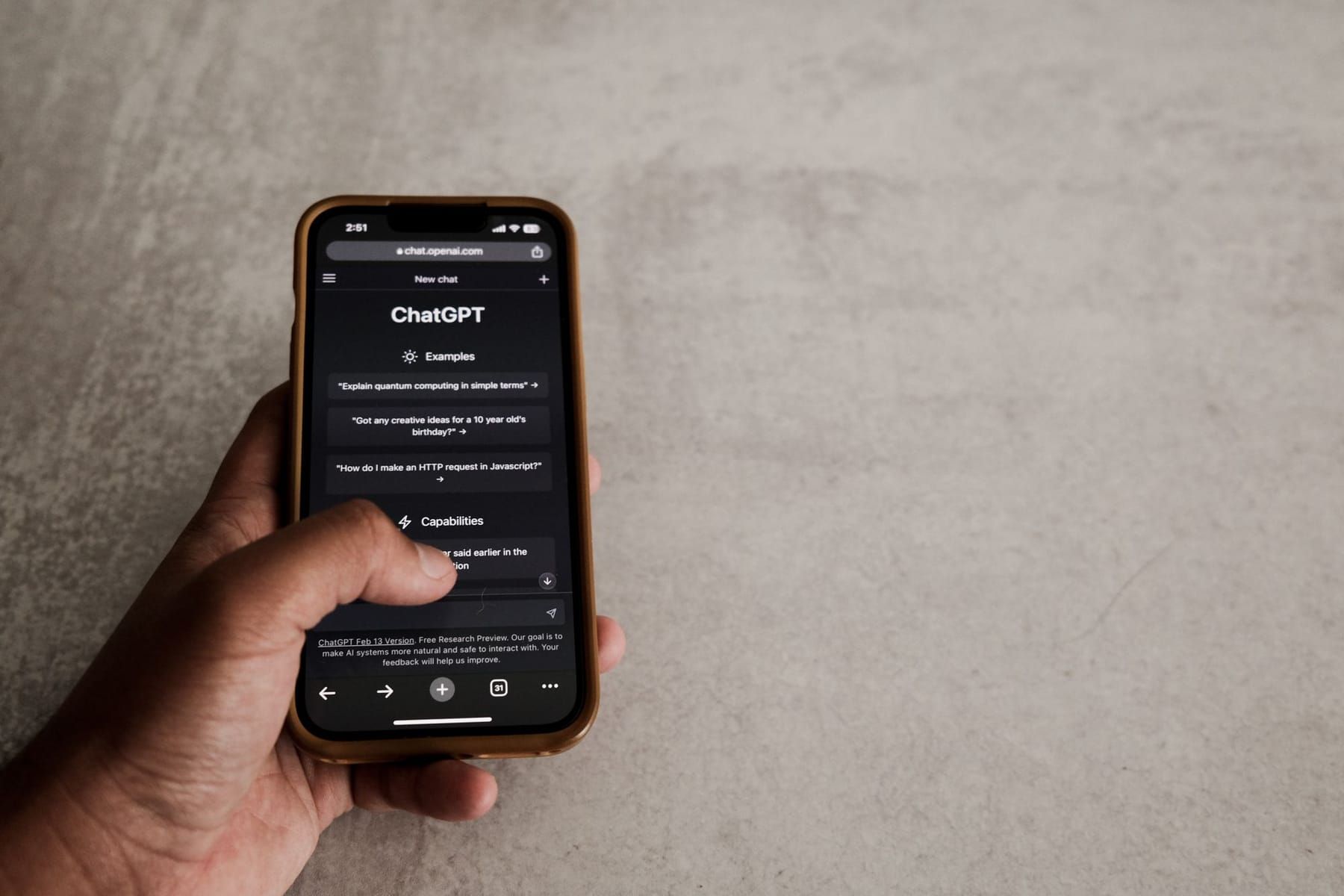
When someone asks ChatGPT or Gemini for the best providers in your industry, your competitors appear and your brand does not, even though your service is as good or better.
Challenge 02 Assistants repeat old prices, services you no longer offer or wrong addresses, because the information about your business is inconsistent or scattered across the web.
 Challenge 03
Your website talks about you, but it doesn't answer specific questions with data, examples or comparisons, so models prefer to cite third parties that do.
 Challenge 04
An inherited robots.txt, a firewall or a misconfigured CDN stops AI assistants' crawlers from reading your site, and nobody on the team has checked.
An AI answer has no second page.
What we do
We work on your brand so ChatGPT, Gemini, Perplexity and AI Overviews understand it, describe it well and cite it.
 01
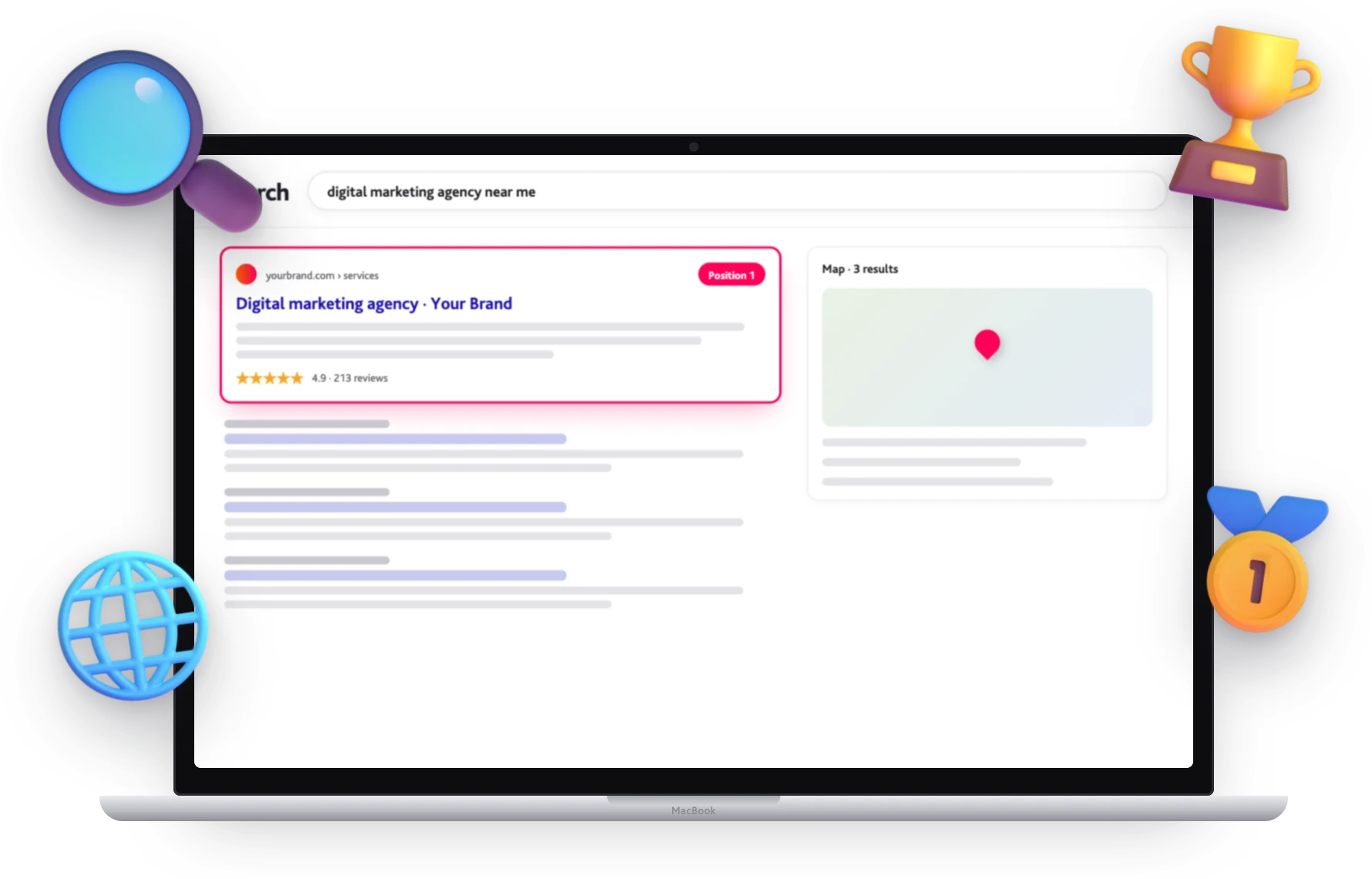
We turn your customers' real questions into a fixed set of prompts that we run every month on the main assistants. That's how we measure your share of citations, who gets cited instead of you and how your brand is described.
02 We rewrite and create pages that answer in the first few lines, with original data, honest comparisons, FAQs and visible authorship, so a model can extract a clear answer and attribute it to you.
 03
We implement markup for organisation, products, services, articles, locations and FAQs, with sameAs links to your official profiles, so search engines and models can identify beyond doubt who you are and what you offer.
 04
We align your name, description, services, contact details and key figures across your website, Google Business Profile, LinkedIn, directories and third-party listings, because contradictions erode the trust of any system that evaluates you.
05 We work on your presence in the sources assistants tend to consult: industry media, comparisons, forums, videos and review platforms. With real stories and data, never with fake reviews or undisclosed paid content.
 06
We review robots.txt, firewall and CDN so AI search crawlers such as OAI-SearchBot, Claude-SearchBot or PerplexityBot can read your site; training crawlers are your call. If it fits, we add an llms.txt, an emerging convention that no major AI provider has confirmed it uses.
How we work
Each phase ends with a deliverable you review and approve, so you always know where your project stands.
We run your key questions in ChatGPT, Gemini, Perplexity, Copilot, Claude and Google to see where you appear, where you do not and which sources carry weight.
We open access to the crawlers that matter, serve key content in HTML and add structured data before producing anything new.
We create citable answers and align your brand information on your website and on third-party profiles.
We work on mentions, reviews and appearances in media and comparisons, the sources assistants tend to use to cross-check.
We repeat the same set of questions every month and show you how your share of citations, the tone and the errors corrected are trending.
What's included
What we measure and report
A monthly report in plain language and an up-to-date dashboard whenever you need it.
Who it's for
Profile 01 Professional services, clinics, software or B2B providers whose customers compare them by asking an assistant for the best options before requesting a quote.
Profile 02 Stores and brands that want to appear when someone asks AI to compare products, answer questions about use or find where to buy.
 Profile 03
Websites that already rank on Google but do not appear, or are poorly described, in answers from ChatGPT, Gemini or AI Overviews.
Industries where we use it most
Keep exploring



SEO and GEO
Our assessment for GEO: AI search visibility shows you exactly what to improve first, with priorities and timelines.
FAQ
SEO works to get your website into a search engine's list of results and earn clicks. GEO works to get AI assistants to mention and cite you inside their answer, often without the user clicking. They share a foundation, because many answers draw on search engines, but GEO puts more weight on citable content, brand consistency and mentions in external sources.
No, and be wary of anyone who promises it. A model's answers vary with the question, the user's history, their location and the version of the system, and no outside company controls them. What we do is increase the reasons for you to be mentioned, correct wrong information and use a fixed set of questions to measure whether your presence improves month by month.
It depends on how each system answers. When the assistant searches the web in real time, like ChatGPT with search, Perplexity or AI Overviews, changes on your website and in external sources can show up within weeks. What a model knows from memory only changes when a new version is trained, so that effect is slower. That's why we measure every month and decide on trends, not on a single answer.
It depends on the number of markets and languages, how many questions need measuring, the technical state of your website and the content and mentions work required. After the visibility assessment we give you a fixed quote in writing. If you already do SEO with us, much of the technical foundation is shared and we factor that in to avoid duplicating work.
No. ChatGPT Ads are paid ads that appear labelled and separate from the answer, and according to OpenAI they do not influence what ChatGPT says. GEO works on the organic side: getting the model to know your brand and cite it on its own merits. They complement each other well: ads give immediate presence wherever the format is available and GEO builds visibility that doesn't depend on spend.
On its own, there's no evidence that it does. llms.txt is an emerging convention for giving models a summary of your website in a simple format, but no major AI provider has confirmed it uses it to decide what to cite. We publish one when it fits because it costs little, but the priority is making your pages crawlable, clear and citable.
Let's talk
We reply with specific questions and, if we're a good fit, a clear proposal: what we'd do, in what order, on what timeline and for what budget.
We reply within one business day with what we need to know.
A 30-minute meeting to understand your business and your goals.
A written proposal with plan, timeline and fixed budget.
Ask AI about us
 Loguimark